Optimize your organic waste processing with corrosion-resistant, well-ventilated fabric structures. Designed for the unique challenges of the composting environment.
Composting creates a highly humid and corrosive environment. Ammonia and other organic gases quickly degrade wood and untreated steel. Proper moisture control and ventilation are critical to maintaining the aerobic process and managing odors.
Champion's composting buildings use inert PVC membranes and hot-dip galvanized steel frames to resist corrosion indefinitely. The high ceilings and large spans allow for massive windrows and easy access for compost turners and loaders.
Enclosed storage protects windrows from rain, ensuring the correct moisture balance.
Support for high-volume extraction fans to manage heat, humidity, and odors.
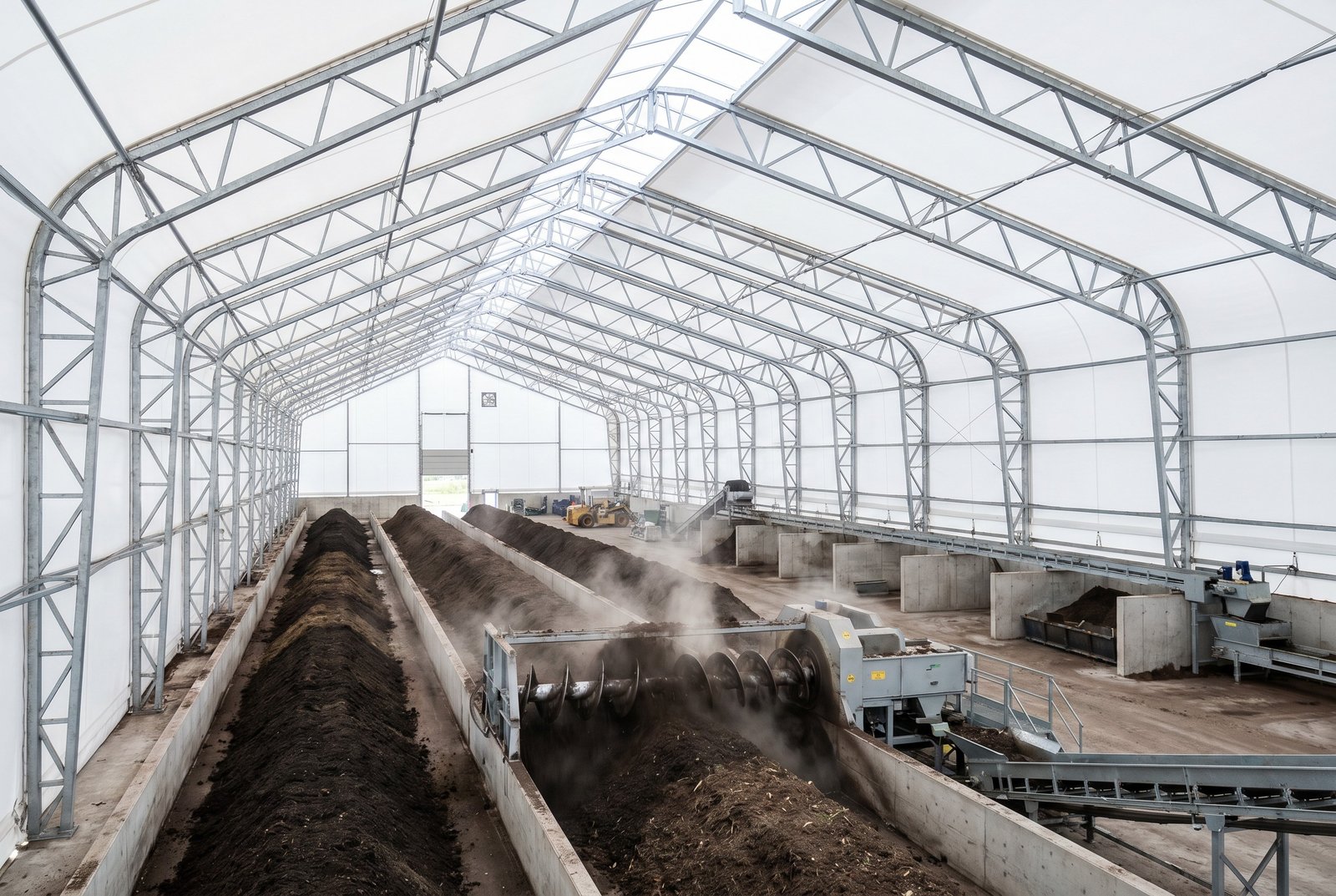
Hot-dip galvanized steel and PVC are the only materials that truly withstand composting gases.
Clear spans allow for efficient windrow layout and heavy equipment movement.
Enclosed structures help contain and treat odors before they impact the community.
| Clear Span Width | 20 m to 60 m |
| Eave Height | 6 m to 10 m for turner clearance |
| Membrane Weight | 22 oz or 27 oz PVC |
| Foundation | Concrete T-walls or cast-in-place bunkers |
No. We use ISO 1461 hot-dip galvanization, which provides a thick zinc coating that is much more resistant to organic acids and ammonia than paint or wood.
Yes. In fact, we recommend mounting on concrete walls or bunkers to allow for material pushing and to maximize interior volume.
We engineer the structure with high-capacity ridge vents and support for active exhaust fans to ensure constant air exchange.
In a composting building or organics processing facility, the humid, ammonia-rich air is lethal to wood and paint. Our hot-dip galvanized steel is the only material that truly lasts.
Enclosing your windrow cover or in-vessel composting cover allows for active odor management and protects the biological process from rain.
Optimize your layout with wide, column-free interiors. Perfect for biosolids storage and easy maneuvering of massive compost turners.
Custom-engineered configurations for odor-control compost buildings and waste facilities.
| Parameter | Standard Recommendation |
|---|---|
| Clear Span Range | 30 m to 70 m (Turner optimized) |
| Apex Height | 9 m to 15 m (Tipping clearance) |
| Membrane Grade | 900–1450 gsm PVC / PVDF (Chemical resistant) (See Membrane Options) |
| Ventilation | High-capacity ridge vents and support for extraction fans |
| Foundation | Concrete T-walls or bunker walls for material pushing |
Composting creates a uniquely harsh internal climate. Our organics processing facilities are engineered for both internal and external loads.
Calculated to ASCE 7 or Eurocode standards for reliable containment in any weather.
Smooth PVC surface promotes natural snow shedding, critical for large-roof agricultural structures.
Hot-dip galvanization to ISO 1461 provides the necessary protection against ammonia corrosion.

From waste stream analysis to final commissioning of your organics facility.
We analyze your material flow and odor control needs to optimize the composting building layout.
Engineers design the organics processing facility with specific ventilation and corrosion-resistant truss spans.
Hot-dip galvanized frames and chemical-resistant membranes are built to survive the biosolids storage environment.
Modular assembly on concrete walls gets your odor-control compost building operational without lengthy delays.
We use ISO 1461 hot-dip galvanization on all steel members, which is significantly more durable than paint or pre-galv in a biosolids storage environment.
While no fabric building is perfectly hermetic, our odor-control compost buildings are designed for negative pressure systems to contain gases.
Yes, we can design the structure to house in-vessel composting covers and all associated aeration equipment.
Durable, engineered fabric buildings for professional organic waste management.
Request a Free Quote