Home / Engineering / Wind Load Analysis
Structural Analysis

Wind Load Engineering

Every Champion structure is engineered to the wind environment of its exact site — not a generic catalog rating. Here is how we calculate, brace and anchor against the wind.

Why It Matters

Wind Is the #1 Load Case for Fabric Buildings

A fabric building presents a large surface to the wind. Uplift, drag and dynamic gust effects must all be resolved through the membrane, into the steel frame, down to the foundation and into the ground. A failure at any link risks the whole structure.

Champion treats wind as a complete load path. We calculate site-specific design wind pressure, then size the truss members, bracing, connections and anchors with a defined safety margin.

🌪

Verified to 180 km/h+

Frames routinely engineered to high-wind and cyclonic regions on request.

📐

Site-Specific Calculation

We use your location, terrain, height and exposure — never a one-size rating.
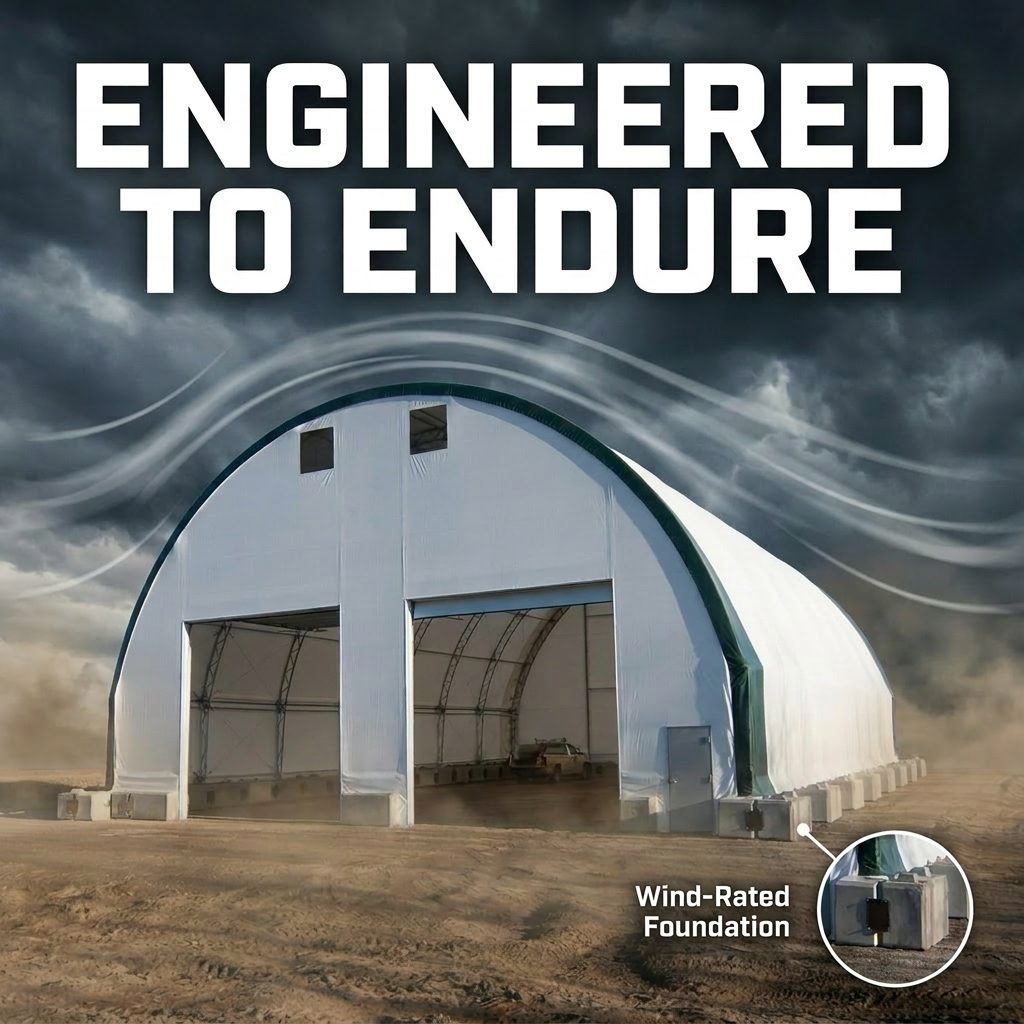
Fabric building engineered for wind
Design Codes

Engineered to International Standards

We design to the code applicable in your market, and can provide stamped calculations on request.

RegionWind Design CodeBasis
North America (US)ASCE 7-22Risk-category based design wind speeds, MWFRS & C&C
CanadaNBC (NBCC)Hourly wind pressure q, importance factors
Europe / Middle EastEN 1991-1-4 (Eurocode)Basic wind velocity, terrain category, peak velocity pressure
Australia / NZAS/NZS 1170.2Regional wind speeds incl. cyclonic regions C & D
InternationalISO 4354Wind actions on structures
Wind Speed Classes

Design Wind Speed Reference

Indicative classes we engineer to. Toggle m / ft & units in the header. Final design always follows your local code and site study.

ClassDesign Wind SpeedTypical EnvironmentFrame Response
Standardup to 120 km/hSheltered inland sitesStandard truss & bracing
High120160 km/hOpen plains, coastal fringeHeavier members, added bracing
Severe160200 km/hExposed mountain & coastalReinforced trusses, dense purlins
Cyclonic200 km/h+Cyclone / hurricane regionsCustom engineering & anchoring
The Load Path

How Wind Force Travels to the Ground

Four links, each engineered with margin.

1

Membrane

Tensioned PVC transfers wind pressure evenly to the frame via keder rails — no flapping, no point loads.

2

Steel Truss

Galvanized trusses carry bending & uplift; member sizes scale with design wind.

3

Bracing

Cross-bracing and purlins stabilize the frame against racking and lateral drift.

4

Anchorage

Base plates, anchor bolts or ballast resist uplift and overturning into the foundation.

Engineering Measures

How We Build Wind Resistance In

Member Sizing

Truss chord & web sizes increase with design wind pressure.

Reduced Bay Spacing

Closer frame spacing in high-wind zones lowers per-frame load.

🔗

Cross & Portal Bracing

Diagonal bracing resists lateral and torsional forces.

Engineered Anchorage

Anchor type matched to uplift: cast-in bolts, screw piles or ballast.

Membrane Tensioning

Correct pre-tension prevents flutter & fatigue under gusts.

🛡

Safety Factor

Capacity designed above peak code demand for a margin of safety.

FAQ

Wind Load Questions

It depends on the engineered design. Structures are routinely engineered to 180 km/h+ and to cyclonic regions on request. Every building is sized to your site's code-defined design wind speed.

Yes. We can provide engineering calculations and drawings to the applicable code (ASCE 7, EN 1991, AS/NZS 1170, etc.) for permitting.

No — the PVC membrane is mechanically tensioned in keder rails so it stays taut and transfers load evenly to the frame, preventing flutter and fatigue.

Through engineered ballast blocks or screw-pile anchors sized to resist the calculated uplift, so even relocatable structures meet wind requirements.

Related

Continue Exploring Engineering

Snow Load Analysis → Structural Engineering → Steel Frame →
Download

Wind & Snow Load Datasheet

Full load classes, design codes and ratings in one PDF.

⬇ Download Load Datasheet (PDF)

Need a Wind-Rated Building?

Send us your site location and we'll engineer to your wind code.

Request a Free Quote