Home / Engineering / Snow Load Analysis
Cold Climate Engineering

Snow Load Engineering

From the Canadian Arctic to the Alps, Champion buildings are engineered to shed and support heavy snow. We analyze ground snow loads, roof slope and drift patterns to ensure year-round safety.

The Challenge

Engineered for Extreme Winter Loads

Snow is a complex load. Unlike wind, it can accumulate and stay for months. Arch and gable roofs respond differently: arch roofs often shed snow naturally, while gable roofs must account for unbalanced loads when wind pushes snow to one side.

At Champion, we don't just guess. We use site-specific ground snow data (Pg) and apply exposure, thermal and importance factors to determine the true design roof snow load (Pf). Our tensioned PVC membrane creates a smooth, slick surface that encourages snow shedding.

Drift & Unbalanced Loads

We calculate extra pressure from snow accumulation against parapets or on the leeward slope.

🔥

Thermal Design

Engineering accounts for -40 °C design temperatures and internal heating effects.
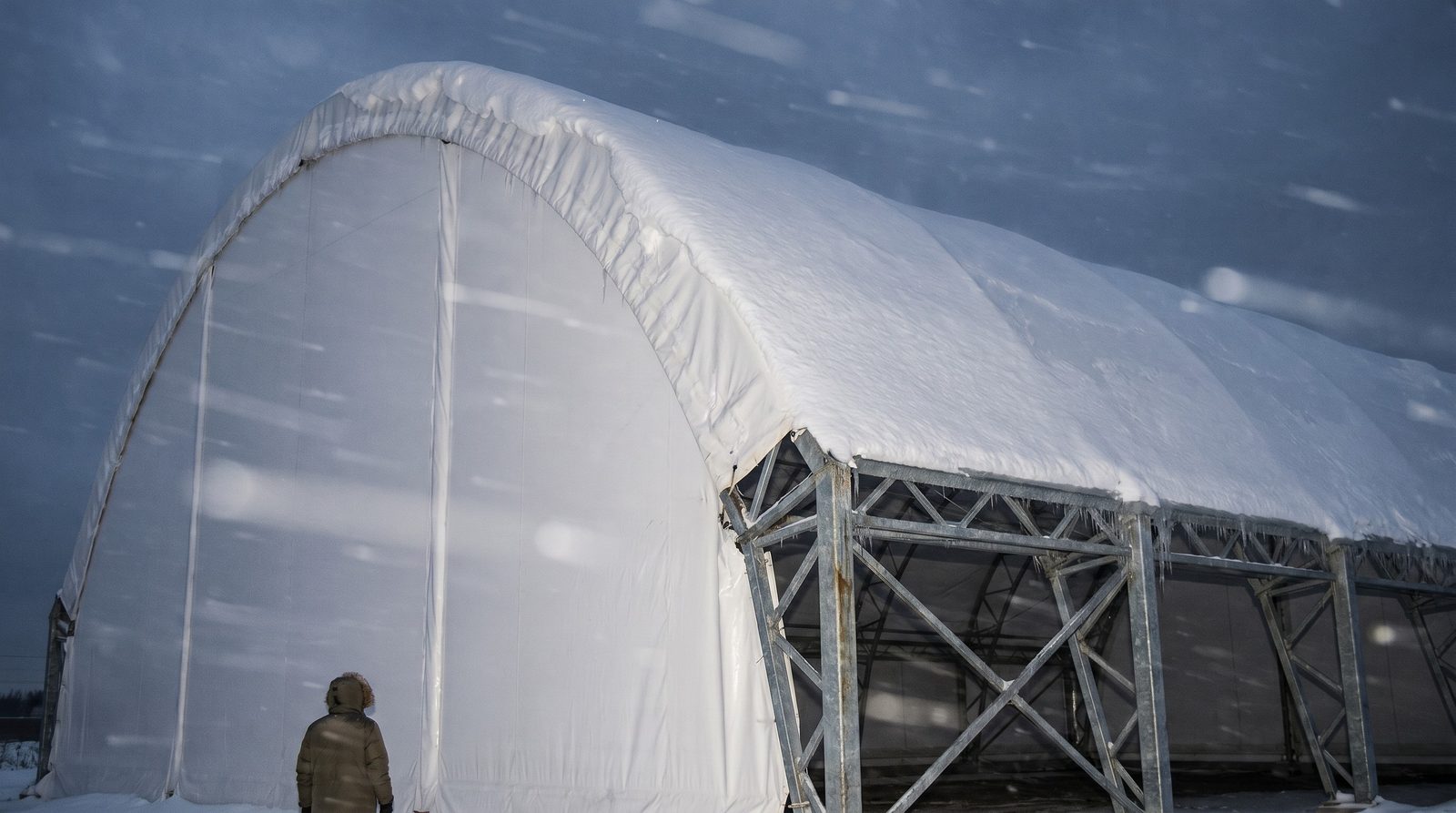
Snow loading on fabric building
Design Codes

Snow Load Compliance

We use regional data and international codes to calculate the precise snow requirements for your structure.

StandardRegionParameters Considered
ASCE 7-22USA / GlobalGround snow Pg, Ce (Exposure), Ct (Thermal), Is (Importance)
EN 1991-1-3EuropeSnow load on roofs, drift, snow guards, local coefficients
NBC CanadaCanadaGround snow, rain load, specified snow load calculations
AS/NZS 1170.3AU / NZRegional snow load s, shape coefficients
ISO 4355InternationalBasis for design of snow loads on roofs
Load Ratings

Snow Load Classes

Indicative ground snow loads (Pg) we engineer for. Final design is always site-specific.

ClassGround Snow LoadTypical EnvironmentEngineering Response
Light1.0 kPa (21 psf)Temperate regionsStandard truss spacing
Moderate2.5 kPa (52 psf)Northern plains, mid-latitudesReinforced chord members
Heavy5.0 kPa (104 psf)High altitude, sub-arcticHeavier gauge steel, closer bays
Alpine7.5+ kPa (157+ psf)Mountain peaks, extreme northCustom heavy-duty truss systems
Geometry Matters

Roof Design for Snow Management

How the building shape interacts with winter weather.

A

Arch Roofs

Naturally shed snow more efficiently than flat roofs. The curved profile reduces the "snow shadow" and promotes sliding.

G

Gable Roofs

Higher pitch options (e.g. 6:12) are used in heavy snow zones to ensure snow slides off quickly.

D

Drift Control

We analyze where snow will pile up (drifting) to reinforce specific bays without over-engineering the whole building.

The Process

How We Engineer for Snow

Steeper Pitch

Increasing roof angle to maximize natural snow shedding and reduce accumulation.

🏗

Heavier Trusses

Using higher-yield steel and larger truss sections for vertical load capacity.

🔴

Reduced Bay Spacing

Placing frames as close as 2 m apart to distribute heavy snow loads.

🚧

Snow Guards

Installing guards to prevent "snow avalanches" where personnel or equipment are present.

🍁

Heating Options

Internal heating and insulation can be used to melt snow and prevent ice damming.

🔭

Drift Analysis

Site-specific modeling of leeward and windward snow accumulation patterns.

Capacity

Snow Load Capacity

Relative snow handling capabilities of different frame/membrane grades.

Standard PVC (610 gsm)
1.2 kPa
Reinforced PVC (750 gsm)
3.5 kPa
Premium PVC (900 gsm)
7.5 kPa
PVDF Industrial (1100–1200 gsm)
10+ kPa
PVDF Maximum (1350–1450 gsm)
12+ kPa
FAQ

Snow Load Questions

We have engineered structures for alpine environments exceeding 7.5 kPa (157 psf). By increasing steel thickness and decreasing frame spacing, we can meet almost any site requirement.

Yes. Codes provide different "shape factors" for arch versus gable roofs. Arch roofs often benefit from a lower snow load coefficient due to their ability to shed snow more easily.

If the building is engineered correctly for your local snow load, manual removal is generally not required. However, for extreme unpredicted storms, monitoring for unbalanced drift is always a best practice.

Ponding occurs when snow melts and water pools in fabric depressions. We prevent this by ensuring high membrane pre-tension and using keder rail systems that keep the fabric taut.

Yes. We provide full engineering packages, including stamped drawings and calculations to NBC Canada, ASCE 7, or Eurocode standards for local permitting.

Related

Continue Exploring Engineering

Wind Load Analysis → Structural Engineering → PVC Membrane →
Download

Wind & Snow Load Datasheet

Full load classes, design codes and ratings in one PDF.

⬇ Download Load Datasheet (PDF)

Need a Snow-Rated Building?

Send us your site location and we'll engineer to your snow code.

Request a Free Quote