Home / Resources / How it Works
The Science of Shelter

How Tension Fabric Buildings Work

Discover the engineering principles that allow a flexible membrane and a rigid steel frame to withstand extreme environmental loads while providing massive clear-span space.

The Core Concept

The Synergy of Steel & Tension

A tension fabric building is not just a tent; it is a highly engineered structural system. It combines the compressive strength of a rigid steel framework with the tensile strength of an architectural membrane. When the membrane is properly tensioned over the frame, it becomes a structural component that stabilizes the entire building.

This design allows for clear spans of up to 80 m without internal pillars, making it ideal for industrial storage, hangars, and sports facilities where unobstructed space is critical.

Load Distribution

Wind and snow loads are distributed across the entire surface and transferred through the frame to the foundation.

Daylight Harvesting

The translucency of the PVC / PVDF membrane allows natural light to illuminate the interior, reducing energy costs.
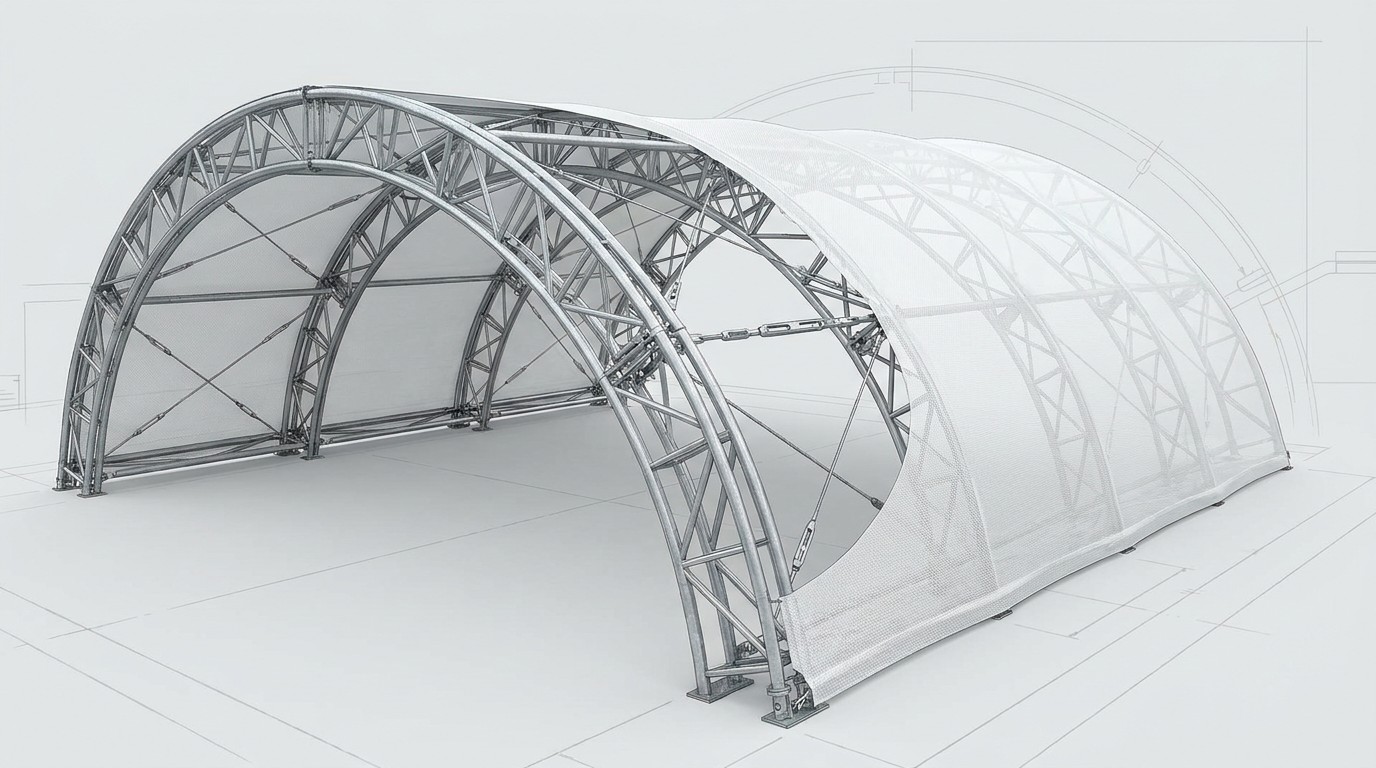
Diagram of tension fabric building engineering
Engineering Process

From Frame to Finish

Our structures are designed to survive the harshest conditions on Earth using a 5-step engineering logic.

01

Rigid Steel Skeleton

We use Q355B structural steel, hot-dip galvanized to ISO 1461. This rigid frame provides the skeleton that defines the building's shape and carries the primary environmental loads.

02

Membrane Cladding

Architectural PVC / PVDF membrane (610 to 1450 gsm) is applied. This material is cross-woven for high tensile strength and lacquered for UV and chemical resistance.

03

Mechanical Tensioning

Using high-torque tensioning systems, the membrane is pulled drum-tight. This eliminates fabric movement (fluttering) and ensures the material acts as a unified structural skin.

04

Load Transfer Path

Environmental forces like wind pressure and snow accumulation are converted into tension within the fabric, which then transfers the energy evenly into the steel trusses.

05

Secure Anchoring

The building is secured via concrete footings, earth anchors, or ballast. This completes the load path, safely grounding the forces applied to the structure.

06

Climate Regulation

Integrated ridge vents and louvers use natural convection to circulate air, preventing condensation and maintaining a fresh internal environment.

Performance Data

Structural Capabilities

Structural ParameterPerformance Standard
Wind Load ResistanceUp to 250 km/h (155 mph)
Snow Load CapacityUp to 5.0 kPa (104 psf)
Clear Span Width10 m80 m
Steel ProtectionHot-dip galvanized (ISO 1461)
Membrane Lifespan15 – 25+ Years
Fire RatingB1 / M2 / DIN 4102

Rapid Deployment

Modular design allows for installation in weeks, not months, compared to traditional steel or concrete.

Energy Savings

Natural light reduces the need for artificial lighting during the day, lowering operational costs.

Corrosion Resistance

Galvanized steel and PVC are immune to rot, rust, and corrosion, even in salt or fertilizer environments.

Relocatability

These structures can be disassembled and moved to a new site with minimal loss of materials.

Learn more about our Engineering Science, Production Process and Industry Applications.

Ready to start your project?

Consult our engineers for a custom solution today.

Request a Free Quote