Unlike traditional buildings, fabric structures are lightweight and flexible, requiring specialized engineering approaches. Our team uses finite element analysis (FEA) to model the interaction between the rigid steel frame and the flexible membrane under varying load conditions.
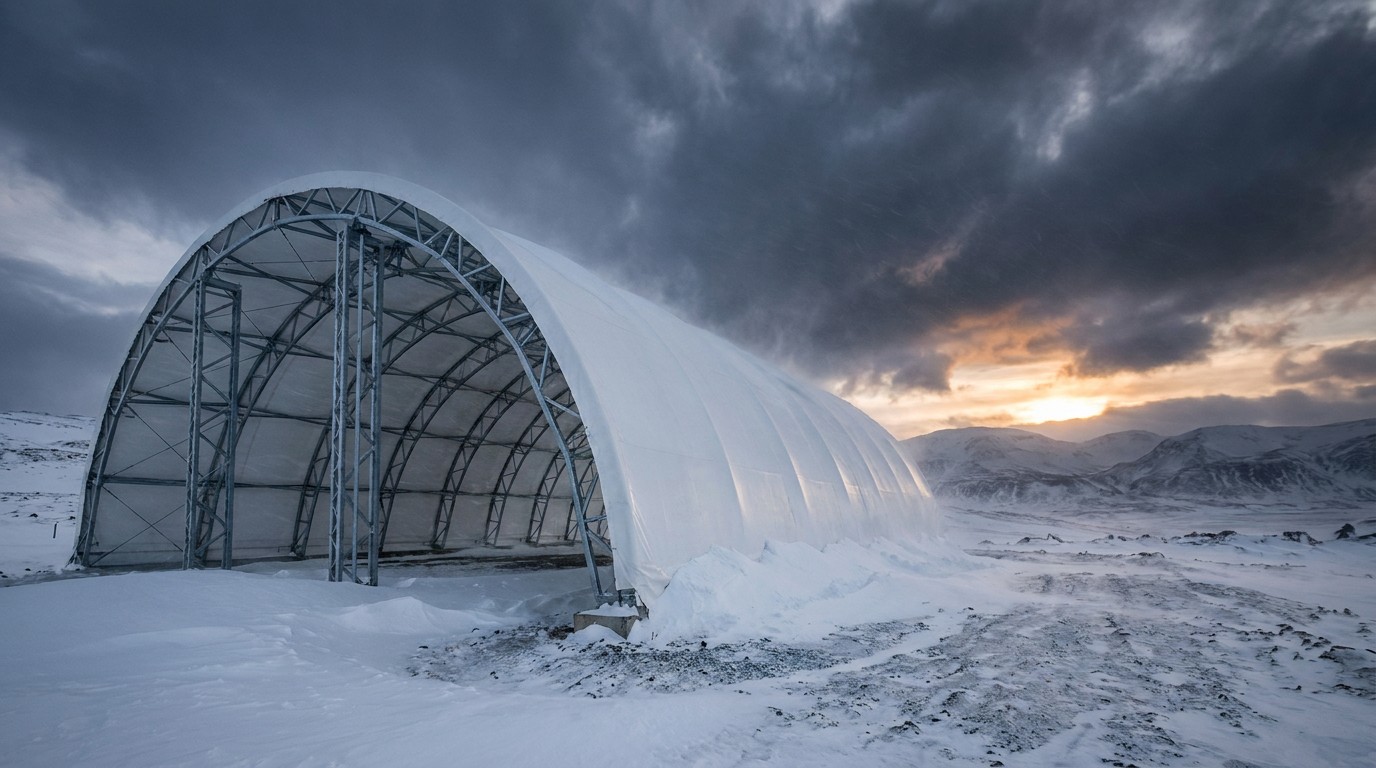
Whether it's a 180 km/h wind in a coastal region or 2.5 kPa snow loads in alpine mountains, every Champion structure is site-specifically engineered to meet or exceed local building codes including ASCE 7, EN 1991, and AS/NZS 1170.
Advanced simulation of stress distribution across the truss and fabric.
Optimized roof profiles that naturally shed snow and reduce wind lift.
We adhere to international standards to ensure global permit approval and long-term safety.
Rigorous wind and seismic calculations for permanent and temporary structures in the US and Canada.
Compliance with European standards for actions on structures, including heavy snow load cases.
Specialized engineering for cyclonic regions and high-seismic zones in Australia and New Zealand.
Corrosion protection standards that ensure the frame's structural life exceeds 50 years.
Modeling of peak gusts and vortex shedding for large-span clear-span buildings.
Calculating reaction loads for concrete, screw pile, or ballast foundations.
| Case Scenario | Standard Load | Heavy-Duty Load |
|---|---|---|
| Wind Speed (Vb) | 120 km/h | 180+ km/h |
| Ground Snow Load (Sk) | 0.5 kPa | 2.5+ kPa |
| Seismic Category | B / C | D / E |
| Membrane Pre-tension | 1.5 kN/m | 3.0 kN/m |
| Steel Yield Strength | Q235B / S235 | Q355B / S355 |
Lightweight structures reduce the size and cost of concrete footings.
Inherent flexibility makes fabric buildings safer in earthquake-prone zones.
Comprehensive technical packages speed up local council approvals.
Buildings designed to withstand localized damage without progressive collapse.
Return to the Blog Index or explore our Engineering Capabilities.
Consult our engineers for a custom solution today.
Request a Free Quote