Home / Resources / Fabric vs Steel
Technical Comparison

Fabric Buildings vs Steel Buildings

Evaluating the performance, cost-efficiency, and operational advantages of tension fabric structures against traditional metal buildings for industrial use.

The Evolution of Industry

Two Systems, Different Strengths

Traditional steel buildings have long been the standard for permanent industrial facilities. However, modern tension fabric structures (TFS) have emerged as a powerful alternative, offering equivalent structural integrity with superior speed and environmental benefits.

While both systems utilize rigid steel frames, the cladding material — architectural PVC membrane vs. corrugated metal panels — defines the core differences in lighting, maintenance, and long-term value.

🚚

Rapid Deployment

Fabric structures are manufactured and installed in a fraction of the time required for traditional metal buildings.

Corrosion Excellence

Champion's hot-dip galvanized frames and PVC covers excel in corrosive environments like salt or fertilizer storage.
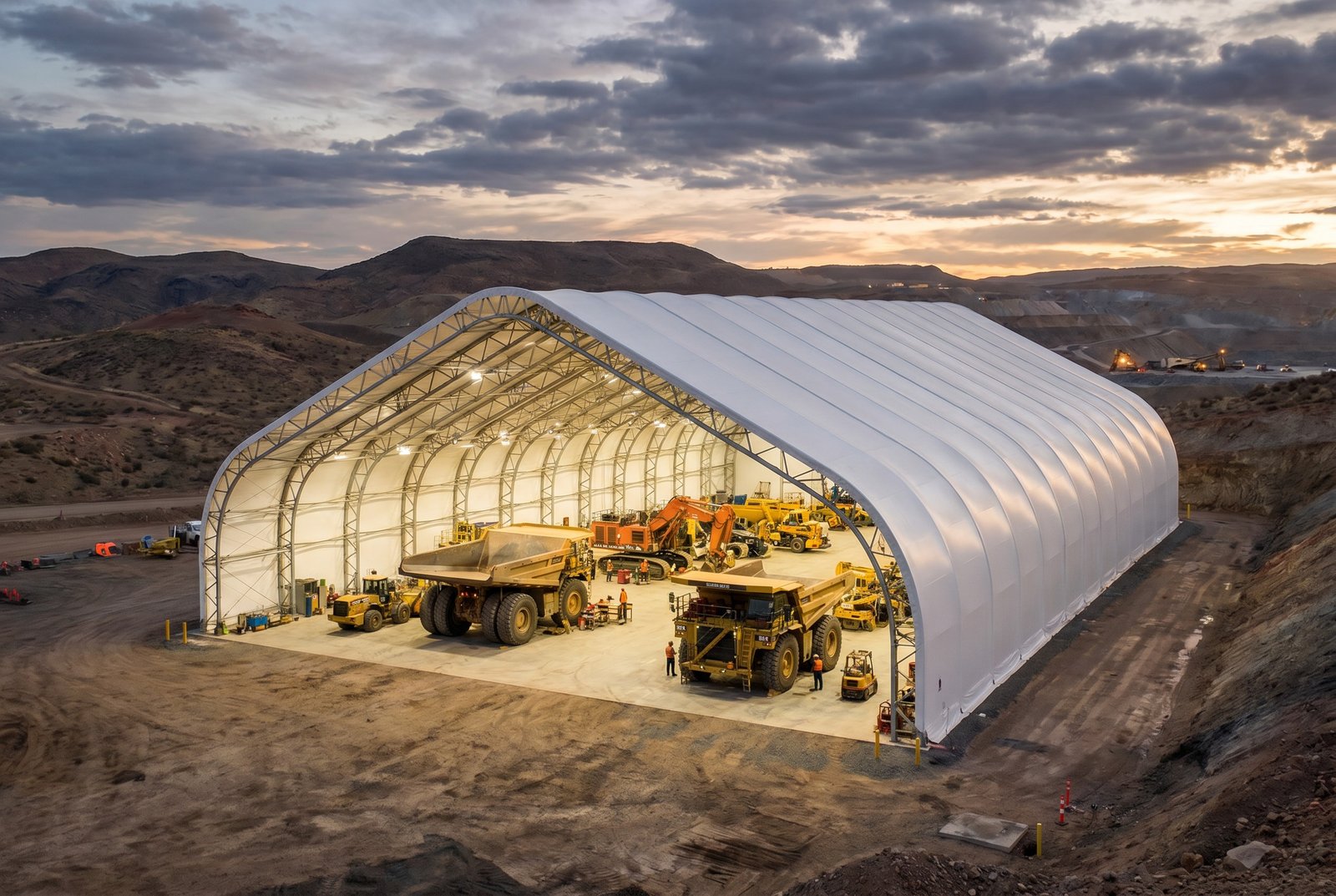
Steel vs Fabric Structural Frame
At a Glance

Side-by-Side Specifications

Compare the fundamental technical differences between these two building technologies.

ParameterFabric BuildingSteel Building
Initial CostLower (30–50% savings)Higher (Material & Foundation)
Build SpeedFast (Weeks)Slower (Months)
Clear Span10 m80 m10 m60 m+
Corrosion ResistanceExcellent (Non-corrosive cover)Moderate (Rust risks at joints)
Natural DaylightHigh (10–12% transmission)Zero (Requires artificial lighting)
RelocatableYesNo (Difficult/Expensive)
Lifespan (Frame)50+ Years50+ Years
MaintenanceMinimal (Self-cleaning PVC)Regular (Paint/Rust/Sealant)
FoundationFlexible (Piles/Blocks/Concrete)Permanent Concrete Only

Advantages and Considerations

▲ Why Choose Fabric?

  • Operational Savings: Translucent covers eliminate daytime lighting costs and reduce energy usage.
  • Superior Environment: Acoustic damping and thermal stability create a better workspace than echoing metal buildings.
  • Foundation Flexibility: Can be installed on asphalt, blocks, or helical piles for faster commissioning.
  • Portability: The modular design allows the building to be dismantled and moved if operations shift.

▼ Why Choose Steel?

  • Point Loads: Traditional steel buildings can sometimes handle heavier hanging cranes more simply than light-truss fabric builds.
  • Security: Rigid metal walls provide a psychological and physical barrier that may be preferred for high-value retail.
  • Customization: Easier to add complex multi-story mezzanine offices inside a standard box frame.
  • Perceived Permanence: Stakeholders may favor the "look" of traditional construction for urban flagship facilities.
Expert Insights

Key Benefits of the Fabric Alternative

Corrosion Resistance

Fabric membranes are naturally immune to rust and chemical rot, making them ideal for bulk salt, fertilizer, and composting operations where metal cladding fails.

Climate Control

The low thermal conductivity of fabric reduces heat transfer, keeping the interior cooler in summer and warmer in winter compared to uninsulated metal.

Speed to ROI

Reduce construction timelines by up to 50%. Faster occupancy means your operation starts generating revenue sooner.

Eco-Friendly

Our PVC / PVDF membranes are recyclable, and the reduced need for artificial lighting significantly lowers the building's carbon footprint.

Learn more about our building systems and engineering standards:

Product Portfolio Tension Fabric Buildings Pricing Guide

Compare Your Project Today

Our engineers can provide a side-by-side cost analysis for your specific site and load requirements.

Request a Free Comparison